
What Can a Dental Nurse Do? Duties, Scope of Practice and How to Qualify in the UK
Dental nurses keep every UK practice running safely, but what they are allowed to do is set out clearly by the General Dental Council (GDC). Knowing that boundary protects patients, protects your registration, and opens the door to extra skills that can grow your career and your pay.
This guide covers what dental nurses can and cannot do, the core duties of the role, the additional skills you can train in, and how to qualify.
What dental nurses can’t do: the GDC scope of practice
The GDC’s Scope of Practice guidance sets out what each dental role is trained and competent to do. Dental nurses provide clinical and other support to registrants and patients. They do not diagnose disease or plan treatment, and they cannot carry out dental treatment that is reserved for other roles.
Tooth whitening is a good example. It is reserved for dentists, and for hygienists, therapists and clinical dental technicians working to a dentist’s prescription. A dental nurse cannot whiten teeth, though with training they can make bleaching trays to a dentist’s prescription.
Working outside your scope is taken seriously. A dental nurse who carries out procedures they are not permitted to do can face fitness-to-practise action, and in serious cases removal from the GDC register. Even within scope, you should only carry out a task if you are trained, competent and indemnified for it.
Dental nurse duties: what the role involves day to day
Every qualified dental nurse can carry out these core duties:
- preparing and maintaining the surgery and equipment
- decontaminating instruments and following infection prevention and control procedures
- making sure materials and supplies are ready, and preparing and mixing dental materials
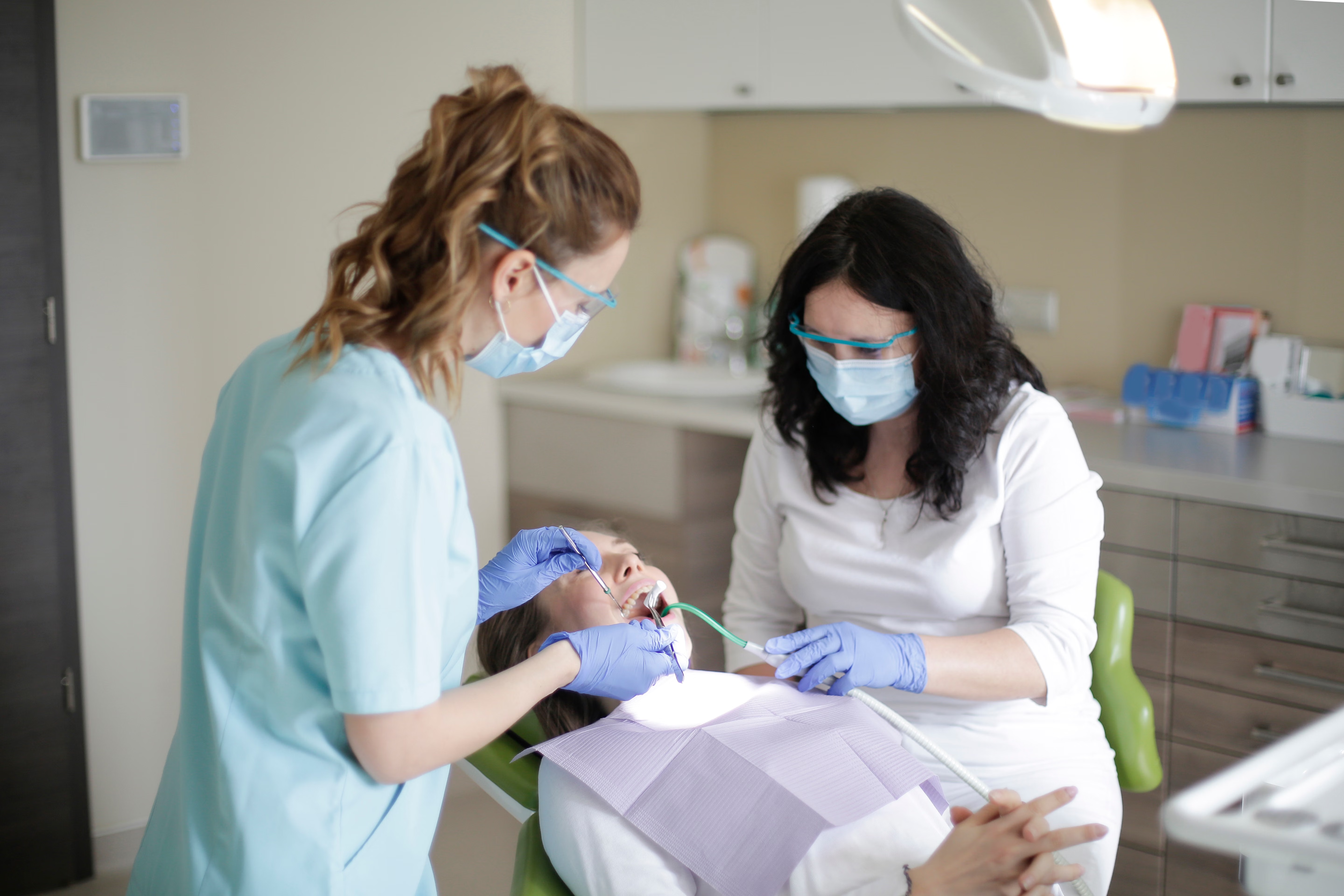
- providing chairside support, responding quickly to the dentist’s requests
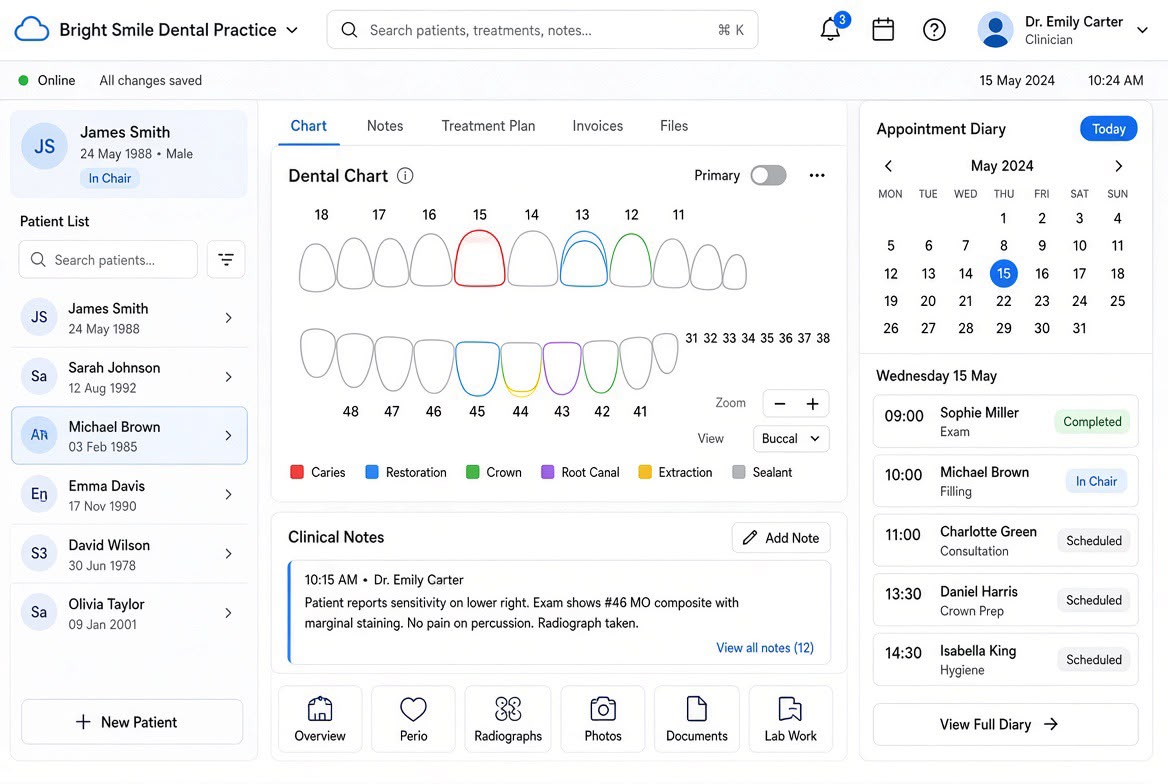
- recording dental charting during examinations and keeping accurate patient records
- preparing equipment, materials and patients for X-rays, and processing radiographs
- monitoring, supporting and reassuring patients, and giving appropriate advice
- supporting patients and colleagues in a medical emergency
Extended duties: additional skills dental nurses can develop
With further training, dental nurses can expand their scope. Extended duties make you more valuable to a practice and often lead to higher pay and more varied work.
Skills you can develop with training:
- oral health education and promotion
- assisting with patients under conscious sedation
- assisting with patients with special needs and orthodontic patients
- intra- and extra-oral photography
- shade taking
- pouring, casting and trimming study models
- tracing cephalographs
Skills carried out on a prescription from, or under the direction of, another registrant:
- taking radiographs
- placing rubber dam
- measuring and recording plaque indices
- removing sutures after a dentist has checked the wound
- taking impressions
- constructing occlusal registration rims and special trays
- repairing the acrylic part of removable appliances
- applying topical anaesthetic
- making mouthguards, bleaching trays and vacuum-formed retainers
Dental nurses can also apply fluoride varnish, either on a dentist’s prescription or directly as part of a structured dental health programme. For more complex skills, choose training from an approved provider that includes an assessment.
How to become a dental nurse in the UK
You don’t need a qualification to start as a trainee dental nurse. Many people begin working in a practice while they study. To become a qualified, registered dental nurse, you need to complete a GDC-approved course.
There are three common routes:
- Part-time course while working: usually requires two GCSEs at grade C (4) or above, in English and maths or a science.
- Full-time course: some colleges and universities ask for A-level or AS-level study.
- Level 3 dental nurse apprenticeship: you earn while you learn, working in a practice alongside your training.
Once you qualify, you register with the GDC before working as a qualified dental nurse. From there, you can add extended duties or train further as a hygienist, therapist or orthodontic therapist.
Dental nurse FAQs
Can dental nurses do teeth whitening?
No. Tooth whitening is reserved for dentists, and for hygienists, therapists and clinical dental technicians working to a dentist’s prescription. Dental nurses can make bleaching trays to a dentist’s prescription.
Can dental nurses take X-rays?
Yes, with additional training and on the prescription of another registrant. All qualified dental nurses can prepare patients for X-rays and process radiographs.
Can dental nurses apply fluoride varnish?
Yes, with training. They can apply it on a dentist’s prescription or as part of a structured dental health programme.
Do you need qualifications to be a trainee dental nurse?
No. You can start as a trainee without qualifications, but you must complete a GDC-approved course to become a qualified, registered dental nurse.
What happens if a dental nurse works outside their scope of practice?
They can face GDC fitness-to-practise proceedings, which in serious cases can lead to removal from the register.
Find dental nurse jobs with DRN
Whether you’re newly qualified or bringing extended duties to the chair, Dental Recruit Network places GDC-registered dental nurses into locum and permanent roles with practices across the UK. Tell us your skills and availability, and we’ll match you with practices that value them.