
Dental Nurse UK Salary Guide 2026: What You Should Really Be Earning (Regional Breakdown Included)

As dental professionals, we understand that salary transparency remains a significant challenge across the dental sector. Too many dental nurses are working below their market value simply because they don't have access to comprehensive, up-to-date salary information. This guide changes that by providing you with the concrete data you need to understand your worth in today's market.
Whether you're just starting your career, considering a move, or preparing for salary negotiations, this comprehensive breakdown will arm you with the facts about what dental nurses are really earning across the UK in 2026.
The Current Salary Landscape for Dental Nurses
The dental nursing profession has seen notable changes in compensation over recent years, with the average UK dental nurse now earning between £23,000 and £30,000 annually. However, this broad range tells only part of the story: your actual earning potential depends on several key factors that we'll explore in detail.
What's encouraging is that experienced dental nurses with specialist training are commanding salaries well above the national average, with some senior positions reaching £39,000 or more. The key is understanding where you fit within this spectrum and what steps you can take to progress.

Salary Progression by Experience Level
Your earning trajectory as a dental nurse follows a clear path, with each stage offering distinct opportunities for growth:
Trainee Dental Nurse: £14,000–£22,000 Starting your career, you'll typically earn at the lower end while completing your training and gaining essential hands-on experience.
Qualified Dental Nurse: £24,000–£30,000 Once qualified, you'll see an immediate salary increase, with most employers recognizing your newly acquired skills and certification.
Senior/Head Dental Nurse: £32,000–£38,000 With leadership responsibilities and advanced skills, senior nurses command significantly higher salaries and often enjoy additional benefits.
Specialist Dental Nurse: Up to £39,000+ Nurses with specialized training in areas like implantology or orthodontics represent the highest earning potential in the field.
NHS vs Private Sector: Understanding Your Options
The choice between NHS and private practice significantly impacts your earning potential, with each sector offering distinct advantages.
NHS Pay Structure
NHS dental nurses benefit from standardized pay bands under the Agenda for Change system:
Band 3 (Entry Level)
- Under 2 years experience: £21,730 annually (£11.12/hour)
- 2+ years experience: £23,177 annually (£11.95/hour)
Band 4 (Experienced)
- Under 3 years experience: £23,949–£25,147 annually (£12.79/hour)
- 3+ years experience: £26,282–£27,596 annually (£13.95/hour)
Band 5 (Senior Level)
- Under 2 years in band: £27,055 annually (£14.01/hour)
- 2–4 years in band: £29,180 annually (£15.45/hour)
- 4+ years in band: £32,934 annually (£17.28/hour)
Private Practice Opportunities
Private sector roles typically offer higher base salaries and additional benefits:
- General private practice: £25,000–£32,000+
- Implant nursing specialist: £29,000–£34,000
- Orthodontic nursing: £27,000–£32,000
Private practices often provide training support, performance bonuses, and flexible working arrangements that can significantly enhance your overall compensation package.
Regional Salary Breakdown: Where Location Matters
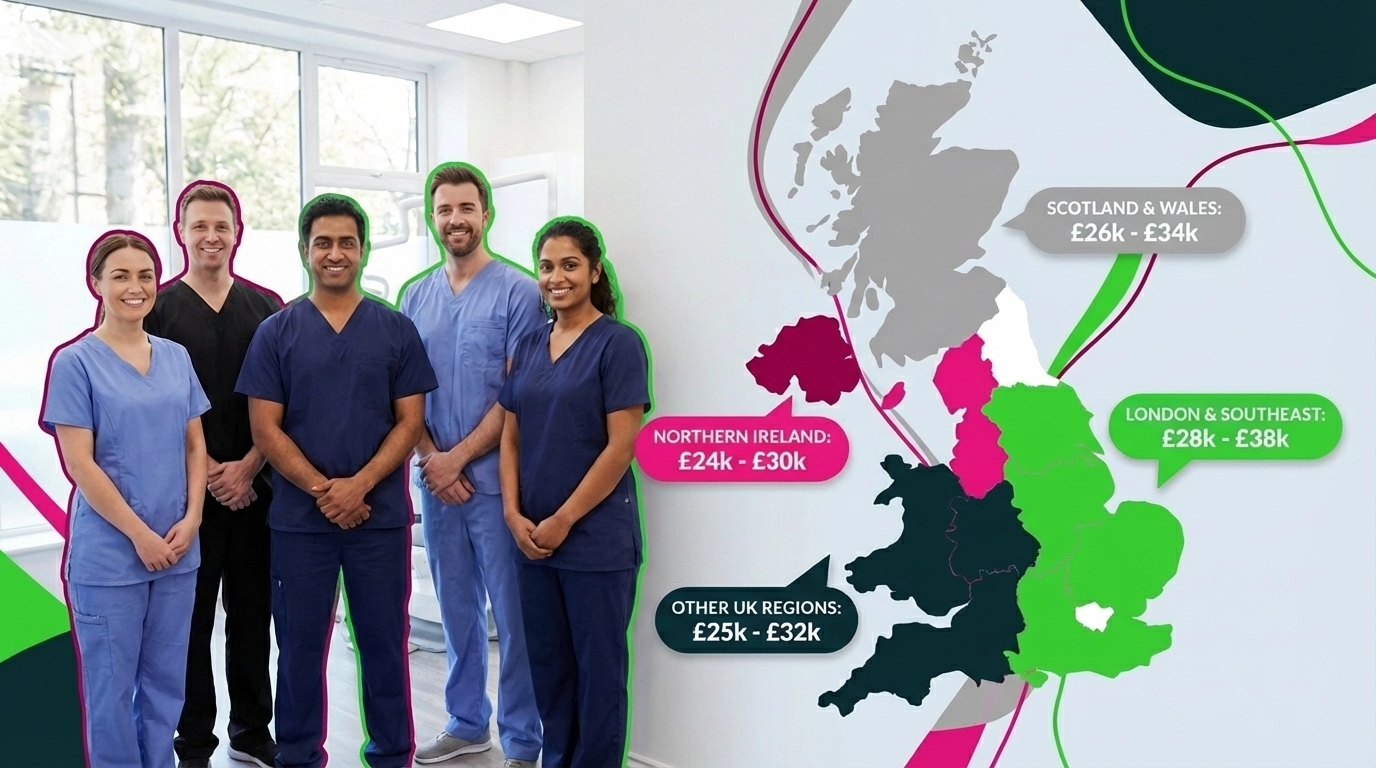
Your geographical location plays a crucial role in determining your earning potential, with significant variations across the UK:
London and Southeast London dental nurses earn £28,000–£34,000, often with additional high-cost living supplements. The capital's competitive healthcare market drives higher salaries, though living costs must be factored into overall value.
Scotland and Wales These regions typically offer £23,000–£28,000, with Scotland showing particularly strong demand for qualified dental nurses in urban centers like Edinburgh and Glasgow.
Northern Ireland Salary ranges from £22,000–£27,000, with Belfast and surrounding areas offering the highest compensation within the region.
Other UK Regions Most other areas fall within the £23,000–£29,000 range, with cities like Manchester, Birmingham, and Bristol often exceeding national averages.
Urban centers consistently outpace rural areas in terms of salary offerings, reflecting both higher demand and increased cost of living.
Specialist Roles: Maximizing Your Earning Potential
Pursuing additional qualifications opens doors to higher-paying specialist positions:
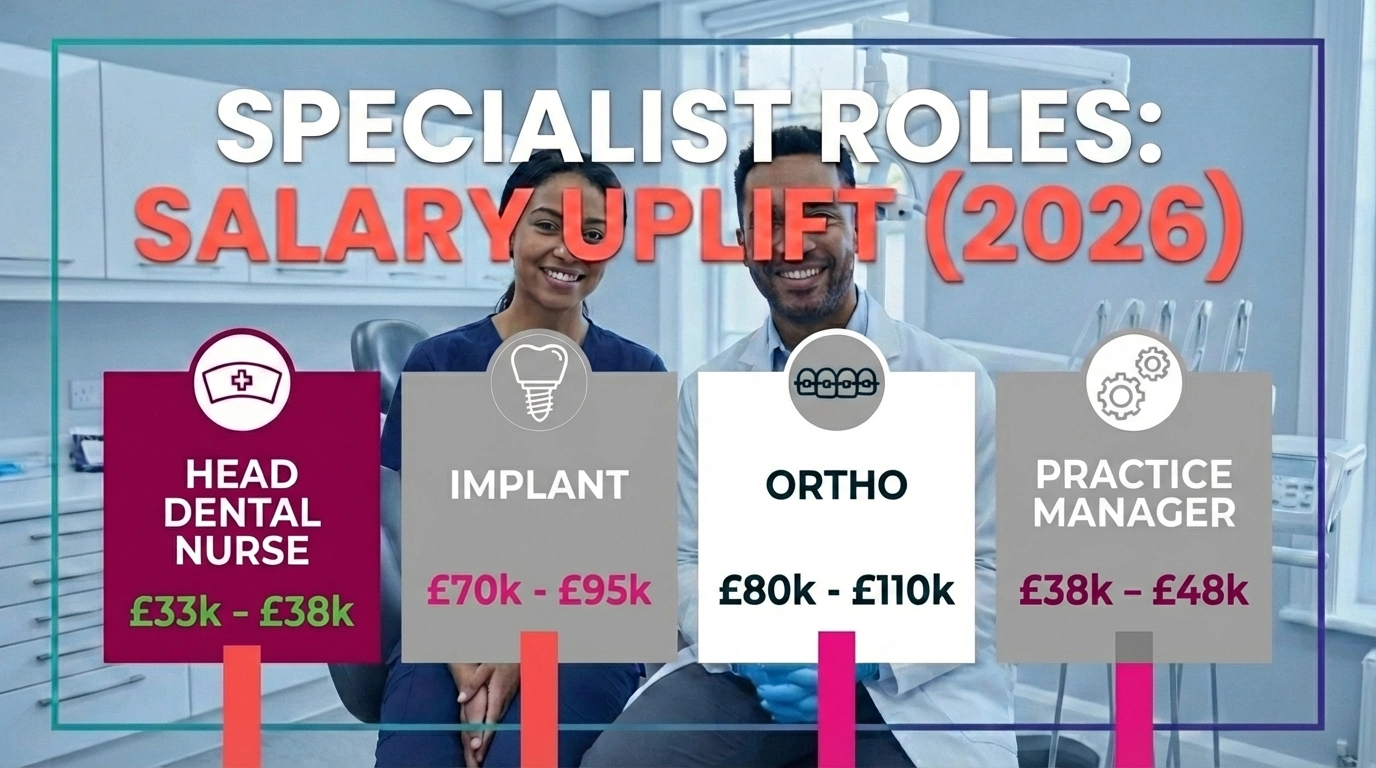
Head Dental Nurse (£33,000–£38,000) Leading nursing teams requires management skills alongside clinical expertise. These roles often include responsibility for training, scheduling, and quality assurance.
Implant Nursing (£29,000–£34,000) Specialized training in implantology is increasingly valuable as more practices expand their treatment offerings.
Orthodontic Nursing (£27,000–£32,000) Working with orthodontic treatments requires specific skills and offers steady earning potential in a growing field.
Practice Management Track (£38,000–£48,000+) Many dental nurses successfully transition into practice management roles, representing significant career advancement opportunities.
Key Factors Affecting Your Salary
Understanding what drives compensation helps you make strategic career decisions:
-
Qualifications and Certifications NEBDN accreditation and additional specialist training directly correlate with higher salaries.
-
Experience Level Each year of experience typically translates to salary increases, with accelerated growth during your first five years.
-
Practice Type and Size Larger practices and specialist clinics generally offer higher compensation than smaller general practices.
-
Additional Skills Radiography qualifications, sedation training, and other certifications can increase your value to employers.
-
Working Patterns Flexible scheduling, weekend availability, and emergency cover often command premium rates.
Strategies to Maximize Your Earning Potential
Taking control of your salary progression requires strategic planning and action:
1. Pursue Continuous Professional Development Invest in additional qualifications and specialist training. The cost of education typically pays for itself within 12-18 months through salary increases.
2. Document Your Achievements Keep detailed records of your training, certifications, and professional accomplishments to support salary negotiations.
3. Research Market Rates Regularly benchmark your salary against current market rates for your experience level and location.
4. Consider Geographic Mobility If feasible, exploring opportunities in higher-paying regions can significantly boost your earning potential.
5. Network Within the Industry Connect with other dental professionals through industry associations and events to learn about new opportunities.
6. Negotiate Strategically Prepare for salary discussions by presenting concrete evidence of your value and market rates for similar positions.
Looking ahead, the dental nursing profession shows strong growth potential. An aging population, increased focus on preventive care, and expanding private dental services all contribute to sustained demand for qualified dental nurses.
The key to maximizing your earning potential lies in understanding your current market value and taking proactive steps to enhance your skills and qualifications. Whether that means pursuing specialist training, exploring opportunities in different sectors, or simply advocating for fair compensation in your current role, the data shows that dental nurses who actively manage their careers see significantly better financial outcomes.
Your skills are valuable, and with the right strategy, you can ensure your salary reflects that value. The opportunities are there: it's up to you to seize them.
If you're ready to explore new opportunities or need support in your career development, Dental Recruit Network connects dental professionals with employers who value their expertise and offer competitive compensation packages.